

Disclaimer: This post may contain affiliate links, meaning we get a small commission if you make a purchase through our link at no extra cost to you. For more information, please visit our Disclaimer Page.
Table of Contents
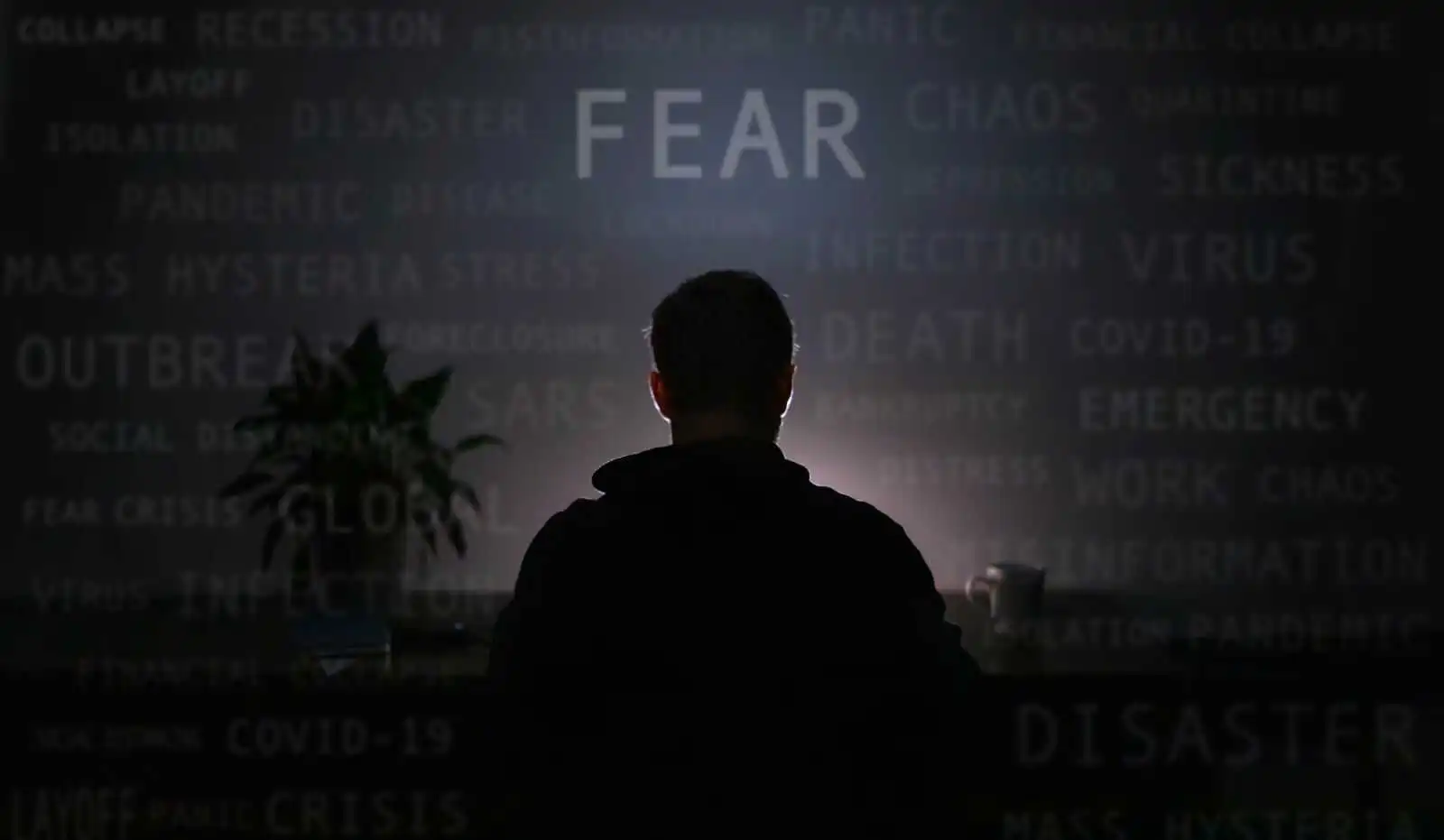
Fear Isn’t Protecting You.
It’s Costing You.
Every opportunity you didn’t take because the timing felt wrong — that was fear. Every room you talked yourself out of entering. Every conversation you rehearsed in your head and then never had. Every version of yourself you kept hidden because you weren’t sure the world was ready for it — or worse, because you weren’t sure you were ready for the world’s response.
We’ve been sold the idea that fear is a warning system. That it exists to keep us safe. And sure — in genuine danger, it does exactly that. But the fear that most of us are living with on a daily basis isn’t protecting us from anything real. It’s protecting us from possibility. From growth. From the version of our lives that’s available on the other side of the uncomfortable thing we keep not doing.
You are not afraid of failure. You are afraid of what failure would mean about you. You are not afraid of rejection. You are afraid that rejection would confirm the thing you’ve been secretly afraid is true — that you’re not quite enough. Not tall enough, not smart enough, not polished enough, not the right fit for the room.
That belief — not the circumstances, not other people, not bad luck — is what’s been running your life. And it’s time to change that.
In This Post
- My Story: The Fear That Was Running My Life
- The Questions That Kept Me Frozen
- What Living in Fear Actually Cost Me
- Understanding Fear Before You Can Face It
- How to Stop Living in Fear: 6 Strategies That Work
- What the Research Says
- What a Fearless Life Actually Looks Like
- Affirmations to Stop Living in Fear
- The Honest Bottom Line
My Story: The Fear That Was Running My Life
Growing up, one of my biggest fears was rejection. Not as a passing worry — as a constant, persistent companion that showed up every time an opportunity required me to be visible, to be present, to put myself in front of other people and risk being found lacking.
And what made it worse was how specific it was. It wasn’t a vague, ambient anxiety. It had particular targets. It ran through the same questions every single time a social situation appeared on the horizon — and those questions had a way of making the decision before I ever got to make it myself.
I would always enter a situation already convinced I wasn’t good enough. “What if they think I’m not tall enough? Not brown enough? Not educated enough?” There was always something in the back of my mind telling me I wasn’t quite the right fit for the opportunity at hand. So I avoided. I stayed out of social spaces. I declined things. I stayed invisible. The logic felt airtight: if I never walked into the room, I could never be thrown out of it.— Personal Experience
The problem with that logic is that staying invisible has a price. And I was paying it steadily, for years — in opportunities not taken, in connections never made, in a version of myself that never got to show up because I was too busy protecting myself from a verdict I’d already written in my own head before anyone else had the chance to weigh in.
The Questions That Kept Me Frozen
I want to give these the space they deserve, because I know I’m not the only one who has had versions of them running on loop. These weren’t occasional doubts. They were the background noise of every situation I considered entering — and they had a way of making avoidance feel like the only sensible option.
The Questions Fear Kept Asking Me
?
“What if they think I’m not tall enough, not brown enough, not educated enough?”
?
“What if I do the wrong thing?”
?
“What if I say the wrong thing?”
?
“How am I expected to behave in this space?”
?
“If they do give me a chance to speak — how do I know I’ll be interesting enough?”
These questions felt like self-awareness at the time. Like I was being honest and realistic. But what they were actually doing was making a decision on behalf of every room I never walked into — before anyone else had the chance to respond. The answer to all of them is the same: you never know until you try. And you can’t try if you never show up.
The truth I eventually had to confront is simple but uncomfortable: you never know how you’ll perform somewhere until you actually go and find out. You don’t know how you’ll come across until you show up, be yourself, and let the experience give you real data — instead of letting fear write the story in advance. Fear is a lousy narrator. It tells the same ending every time: rejection. And it is almost always wrong.
What Living in Fear Actually Cost Me
This is the section most posts skim over too quickly. Living in fear doesn’t just feel uncomfortable. It has real, concrete, measurable costs. Here’s what mine looked like — named plainly, without softening.
📹 My YouTube Channel
I had ideas. Things to say. A perspective worth sharing. I didn’t start because I was terrified of how I’d be received. Fear of rejection from an audience I hadn’t even built yet kept me from building something that mattered to me.
🎤 Speaking Engagements
Opportunities came. I turned them down. I told myself I wasn’t ready. What I meant was: I was too afraid to stand in front of people and risk being found lacking. Those stages went to someone else.
🤝 Social Connections
Invitations declined. Events skipped. People I never met because I never showed up to the places where I might have met them. A whole network of potential relationships that never had the chance to form.
📈 Career Opportunities
Rooms I didn’t enter. Conversations I didn’t start. Possibilities that required me to put myself forward — and a fear that consistently talked me out of doing it before the opportunity could even make a decision.
I name these specifically because I think most people who live in fear are doing so without a clear account of what it’s actually costing them. The cost is abstract until you name it. Once it’s named, it becomes harder to justify than the fear itself. And that shift — the cost becoming more visible than the fear — is often what finally creates the willingness to do something different.
Understanding Fear Before You Can Face It
Before you can stop living in fear, you need to understand what it actually is — because fear is routinely misread as truth. When that wave of dread arrives before a social situation, your brain isn’t giving you information about what will happen. It’s giving you information about what it’s afraid might happen. Those are very different things, and the distinction matters enormously.
Fear of rejection specifically tends to come from a few consistent sources: past experiences that taught you that putting yourself forward is risky, a belief that your worth is conditional on being accepted, and a nervous system that has learned to treat social evaluation as genuine threat. It’s not irrational — it’s a pattern your brain built to protect you. The problem is that the protection has become the cage.
The key distinction worth holding: Fear is your brain running a prediction based on past data. But predictions are not facts. The model was built during more vulnerable periods of your life — and you are not that person anymore. The situations you’re walking into now are not the situations that built the original fear. The model needs updating, and the only way to update it is to go into the situations and collect new evidence.
Understanding the type of fear also matters. Fear of rejection is rooted in belonging — and belonging is a genuine, wired-in human need, which is why the fear feels so visceral and so personal. You’re not weak for having it. You’re human. The only question is whether you’re going to let a very human fear make your life decisions for you — or whether you’re going to learn to move alongside it.
How to Stop Living in Fear: 6 Strategies That Work
These aren’t abstract principles. They are the things that actually moved the needle — tested in real conditions, not read in a book and passed along untested.
1
Name It First
Identify the Source of Your Fear — Get Uncomfortably Specific
Vague fear is almost impossible to challenge. “I’m scared” is hard to argue with. “I’m afraid this person will think I’m not educated enough and dismiss me because of it” — that’s a specific belief that can be examined, tested, and compared against actual evidence.
When I got specific about mine — naming exactly what I was afraid people would think about my height, my complexion, my background — I could finally look at it directly. And the first question that followed was: where is the actual evidence that this is how people see me? Most of the time, the honest answer was: there isn’t any. I had been rejecting myself on behalf of rooms that had never made a single decision about me. The fear was doing the rejecting. Nobody else was.
Write down the exact fear. Not “I’m afraid of being rejected” — but “I’m afraid that [specific person / type of person] will think [specific thing] about me because of [specific characteristic].” Now ask: is this based on evidence or prediction?
2
Reframe the Story
Life Happens For You — Setbacks Are Data, Not Verdicts
When you’re living in fear, everything that happens feels like it’s happening to you. Rejection becomes proof of inadequacy. A setback becomes confirmation that you were right to be afraid. Every outcome gets filtered through the lens of what it says about your worth.
The reframe is this: challenges and setbacks are not punishments. They’re data. They’re redirections. They’re the raw material of growth — which is only available to you if you’re actually in the game, not watching from the outside. Every room I finally walked into that didn’t go perfectly was still teaching me something I couldn’t have learned from the doorway. The rooms that went well were completely inaccessible to the version of me that was avoiding them. Being in the room — whatever the outcome — is always more valuable than the imagined safety of staying out of it.
Fear tells you that staying out is safe. It’s not safe. It just has a different cost — and that cost comes in the form of a life that stays smaller than it was supposed to be.
3
Stop the Avoidance Loop
Take Responsibility — Stop Letting Fear Write Your Excuses
Fear is extraordinarily good at providing cover. It generates convincing, reasonable-sounding reasons for why this particular opportunity isn’t right, why now isn’t the time, why someone else would be better placed. I let it do this for years. I mistook fear-generated excuses for honest self-assessment. They’re not the same thing, and the difference is worth learning to recognize.
Taking responsibility means catching yourself mid-excuse and asking: am I declining this because it’s genuinely not right for me, or am I declining this because I’m afraid of what happens if I try? That question is uncomfortable. But it’s the one that creates movement. If you’re also working on the underlying self-belief alongside this, our post on 6 practical ways to boost confidence addresses the internal layer that makes this work stick long-term.
Every time you let fear make your excuses, you’re outsourcing your life’s decisions to the part of your brain that is most invested in keeping you still. That’s not wisdom. That’s avoidance dressed up as caution.
4
The Science-Backed Approach
Gradual Exposure — Build the Evidence Your Brain Needs
This is the most consistently validated approach in fear psychology, and it’s exactly what I did — not because I knew the research, but because total immersion felt unsurvivable and small steps didn’t. You don’t have to walk into the most terrifying version of the situation at maximum intensity from day one. You build up to it, one manageable exposure at a time.
Start with situations that feel like a 3 or 4 out of 10 on your anxiety scale. Stay a little longer than you normally would. Introduce yourself to one person. Hold eye contact slightly longer than feels comfortable. Then do it again. Your nervous system learns through direct experience that the feared outcome either doesn’t materialize, or is survivable when it does. Each exposure rewrites a small piece of the model your brain has been running. Over time, the model updates — and the fear that once felt immovable starts losing its grip. This pairs directly with the social anxiety strategies we cover elsewhere, which use this same graduated framework in more detail.
The YouTube channel didn’t come on day one. It came after smaller steps had built enough foundation to make it feel possible. Sequence matters. Don’t skip the small steps — they’re doing more work than they look like they’re doing.
5
Present-Moment Practice
Be Fully Present — Fear Only Lives in the Imagined Future
Fear of rejection is almost always future-focused. It’s projecting forward into a moment that hasn’t happened yet — imagining expressions, rehearsing the dismissal, pre-experiencing the embarrassment. None of that is happening right now. Right now you’re just here. And fear has significantly less power in the actual present moment than it does in the imagined future.
Mindfulness practice trains you to come back to what’s actually happening rather than what you’re afraid might happen. Even five minutes of intentional breathing before a high-stakes situation can interrupt the forward-projection loop that fear runs on. Harvard Health highlights mindfulness-based approaches as among the most effective tools for managing chronic fear and worry. When you’re actually in the room, focused on the actual conversation in front of you, fear loses the canvas it needs to paint on. Take away the future and it has very little to work with. Our post on 7 tips to improve mental health covers mindfulness practices in practical detail alongside this.
I noticed consistently that the situations I’d been dreading were almost never as difficult as the anticipation of them. The fear of the thing was reliably worse than the thing itself. That gap — between the anticipation and the reality — is where most of the suffering lives.
6
The Reframe That Changes Everything
Treat Fear as a Signal — Not a Stop Sign
This was the shift that changed the most for me practically. Fear, discomfort, the nervous flutter before something that matters — these aren’t warnings to back away. They’re signals that something worth doing is directly in front of you. Significant opportunities almost always carry some fear. That’s not a red flag. It’s confirmation that the stakes are real.
When I started treating the nervous feeling as information — “this matters enough to make me nervous, which means it’s worth doing” — it didn’t eliminate the feeling. But it completely changed what I did with it. I moved toward it instead of away from it. The speaking engagements. The social events I’d been declining. The YouTube channel. All of them came with fear attached. I did them anyway. And none of them produced the rejection my fear had been so certain about. As the Mental Health Foundation notes, recognizing your feelings, naming them, and choosing to act anyway is the core practice of overcoming fear. The action is what teaches your brain the new story.
Fear says stop. Courage says go anyway. The difference between the life you have and the life you want often comes down to which one you listen to.
What the Research Says About Overcoming Fear
🔬 Research-Backed
The personal experience above is real — but the research lines up underneath it in a way that should be genuinely reassuring, because it means the path isn’t just anecdotal. It’s structurally sound.
According to Harvard Health, chronic fear has measurable, documented impacts on physical health — affecting sleep quality, immune function, cardiovascular health, and overall energy. Actively working to reduce fear isn’t a self-improvement luxury. It’s a health decision with real, concrete returns that go well beyond how you feel in social situations.
The Mental Health Foundation confirms that gradual exposure — working through feared situations incrementally from least to most difficult — is one of the most robustly validated approaches in fear psychology. The mechanism is straightforward: each time you face a feared situation and come through it, you deposit new evidence into the model your brain is running. Over time the model updates, and fear’s grip on those situations genuinely loosens. This isn’t willpower. It’s neuroscience.
Recent research also shows that cognitive restructuring — actively examining and challenging the specific beliefs underlying fear — is most effective when combined with mindfulness. The combination works because mindfulness keeps you anchored in the present where fear has less fuel, while cognitive restructuring directly challenges the beliefs the fear is built on. Together they address it from two angles simultaneously, which is consistently more powerful than either approach alone.
What a Fearless Life Actually Looks Like
I want to be honest about what “fearless” actually means, because the word can set an unrealistic expectation. A fearless life is not one without fear. It’s one where fear no longer holds veto power over your decisions.
I still feel the nervous flutter before putting something out publicly. I still have moments of “what if this doesn’t land the way I hope.” The difference is that I no longer let that flutter be the final word. I feel it, I acknowledge it, and I go anyway. That’s not the absence of fear. That’s freedom from its control. And the difference between those two things is the whole game.
What Changed When I Stopped Letting Fear Decide
🎤
Speaking Opportunities
I started saying yes. And discovered I was more capable in those spaces than my fear had ever given me credit for. The rejection it had guaranteed never arrived.
📹
The YouTube Channel
I started it. The version of me that kept avoiding it never found out what was waiting on the other side. The version that started, did.
🤝
Real Connections
Walking into social spaces instead of avoiding them meant meeting people I never would have otherwise. The vulnerability of showing up opened doors that isolation never could.
🪞
A More Accurate Self-Image
The most surprising result: I found out that the version of myself fear had been describing — not interesting enough, not the right fit — wasn’t who people actually saw. I had been far more wrong about myself than I realized.
None of these outcomes were available to the version of me that was avoiding. They only became possible when I chose to show up anyway — imperfectly, nervously, unsure of how it would go. That’s what courage actually looks like from the inside. Not confidence. Just movement, despite the fear. As we explore in our post on how optimism affects happiness, the shift from fear-driven to possibility-driven thinking changes not just what you do but what you’re even able to see as available to you. These two mindsets feed each other directly.
Affirmations to Stop Living in Fear
Say these before you fully believe them. That’s the point — you’re training the belief one repetition at a time, not waiting until it already feels true.
I am not defined by who I feared I wasn’t. I am defined by who I choose to be.
Fear has an opinion. It does not have a vote.
I am allowed to take up space — in every room, in every conversation, in my own life.
The rejection I feared was almost never the reality. I choose to find out instead of assume.
I am brave enough to be seen — even when being seen is uncomfortable.
Every room I walk into despite fear is evidence of my courage. I am building that evidence daily.
I release the need to be perfect before I begin. Moving imperfectly beats standing still perfectly.
God did not create me to shrink. I was made for full presence, not safe invisibility.
Fear is a visitor. It does not live here. I do.
Every room I walk into, I belong. I decide that — not fear.
On A Final Note
Fear may feel powerful, but it’s only as strong as you allow it to be. Learning how to stop living in fear begins with small, intentional steps.
Start by recognizing the fears that are holding you back and understanding their triggers.
Then, take action—whether it’s challenging your thoughts, building a support system, or stepping out of your comfort zone.
You don’t have to do it all at once. Every step you take is a victory, no matter how small.
The more you practice, the easier it becomes to face challenges with confidence and strength.
Fear thrives on inaction, but courage grows through effort.
When you focus on progress, not perfection, you’ll notice fear losing its grip on your life.
Replace those “what-ifs” with “why nots,” and start living a life driven by purpose, not fear.
This journey isn’t just about overcoming fear—it’s about reclaiming your power, trusting yourself, and embracing possibilities.
Your future self will thank you for the courage you’re building today.
So, take a deep breath, and let’s move forward. Fear doesn’t stand a chance when you’ve got a plan—and now, you’ve got one.




Thank you
You’re welcome!!